I nearly killed my first eyelash viper with a heat lamp.
Not because I was careless. Not because I didn’t care. But because nobody told me that cloud forest snakes don’t need the same heat as desert species. I assumed all reptiles wanted it hot and dry. So I set up a basking spot at 95°F, kept humidity around 40%, and wondered why my snake looked miserable.
She stopped eating. She stopped moving. She just sat there, coiled tight, trying to conserve what little moisture she had left.
It took me two weeks to figure out what was wrong. Two weeks of stress, research, and guilt. And when I finally got the eyelash viper temperature and humidity dialed in, the change was immediate. She started eating again. She started exploring her enclosure. She stopped looking like she was waiting to die.
That experience taught me something important: eyelash viper temperature and humidity aren’t suggestions. They’re the difference between a thriving snake and a dying one.
This guide covers everything I’ve learned since then. The numbers, the tools, the mistakes, and the fixes. If you’re keeping eyelash vipers — or thinking about it — this is the stuff that actually matters.
Why Eyelash Viper Temperature and Humidity Matter So Much
Eyelash vipers (Bothriechis schlegelii) come from the cloud forests of Central and South America. These aren’t deserts. They’re not tropical lowlands either. Cloud forests are unique environments — cool, damp, and shaded, with temperatures that stay relatively stable year-round.
In the wild, eyelash vipers spend most of their time coiled on branches, waiting for prey. They’re exposed to:
- Ambient temperatures between 70-80°F
- Humidity levels of 80-100%
- Constant air movement
- Frequent rain and mist
- Dense canopy cover that filters sunlight
When we bring them into captivity, we need to replicate these conditions. If the eyelash viper temperature and humidity are wrong, everything else falls apart:
- Too hot = dehydration, stress, organ damage
- Too cold = poor digestion, suppressed immune system, refusal to eat
- Too dry = stuck shed, respiratory issues, dehydration
- Too humid (without ventilation) = scale rot, bacterial infections, mold
It sounds complicated, but once you understand the basics, it becomes second nature.
Eyelash Viper Temperature Requirements
Let’s start with the numbers you need to know.
The Ideal Temperature Gradient
Eyelash vipers need a temperature gradient — a warm side and a cool side — so they can thermoregulate by moving around the enclosure.
| Zone | Temperature Range |
|---|---|
| Basking spot | 82-85°F |
| Ambient (warm side) | 78-80°F |
| Ambient (cool side) | 72-75°F |
| Night drop | 68-72°F |
Notice something? The basking spot is lower than what you’d use for a ball python or bearded dragon. That’s because eyelash vipers are cloud forest animals — they don’t need intense heat. In fact, sustained temperatures above 90°F can be dangerous.
Why I Keep My Basking Spot Lower Than Most Guides Recommend
A lot of care sheets will tell you to aim for 85-88°F at the basking spot. That works for some keepers. But in my experience, eyelash vipers prefer it a little cooler.
My current setup sits at 83°F on the hot end, and my vipers use the basking spot regularly without showing any signs of overheating. When I first started, I kept it at 88°F, and my snake avoided the hot side entirely. She stayed on the cool end, coiled tight, looking stressed.
The lesson? Watch your snake. If they’re always on the cool side, your hot side is too hot. If they’re always on the warm side, the enclosure might be too cold.
Night Temperature Drop
Eyelash vipers experience natural temperature drops at night in the wild. I let my enclosure drop to around 70°F at night — sometimes a little lower in winter. This mimics their natural cycle and seems to promote better feeding responses.
You don’t need a special night heat source unless your room gets below 65°F. If it does, a low-wattage ceramic heat emitter on a thermostat will keep things stable.
Eyelash Viper Humidity Requirements
Now for the part that trips up most keepers: humidity.
The Ideal Humidity Range
Eyelash vipers need high humidity. Not “slightly damp” — properly humid.
| Time | Humidity Range |
|---|---|
| Daytime (after misting) | 70-85% |
| Nighttime | 80-100% |
| Temporary spike (after heavy misting) | Up to 100% |
The key is to let humidity fluctuate naturally throughout the day. A constant 95% humidity with no ventilation will cause problems. You want a cycle: mist in the morning, let it dry slightly during the day, mist again at night.
How I Maintain Eyelash Viper Humidity
I use a combination of methods:
1. Hand Misting
Twice a day — once in the morning, once at night. I use a pump sprayer with dechlorinated water and mist the enclosure thoroughly. The plants and substrate hold the moisture, releasing it slowly over the next few hours.
2. Substrate Choice
I use a mix of coconut coir and sphagnum moss. This combination holds moisture well without becoming soggy. It also releases humidity slowly, which helps maintain stable levels between mistings.
3. Live Plants
Live plants are a game changer for eyelash viper humidity. They release moisture through transpiration, which helps keep humidity elevated naturally. I use pothos, bromeliads, and ferns — all species that thrive in high-humidity environments.
4. A Water Bowl
A wide, shallow water bowl provides drinking water and adds to ambient humidity through evaporation. I place mine on the cool side of the enclosure.
5. A Misting System (Optional but Worth It)
If you struggle to maintain consistent eyelash viper humidity — especially if you live in a dry climate — a misting system is worth every penny. I fought with hand misting for months before finally setting one up. Now my humidity stays stable, and I don’t have to remember to mist twice a day.
The Tools I Use to Monitor Eyelash Viper Temperature and Humidity
You can’t manage what you don’t measure. Here’s what I use:
Digital Thermometer/Hygrometer Combo
This is non-negotiable. You need accurate readings for both temperature and humidity. I use a digital combo unit with probes placed on both the warm and cool sides of the enclosure.
Temperature Gun
A infrared temperature gun lets me spot-check the basking spot, the cool side, and the snake itself. It’s useful for verifying that your heating elements are working correctly.
Thermostat
If you use any heat source — heat panel, ceramic heat emitter, heat mat — you need a thermostat. No exceptions. Unregulated heat sources can spike and kill your snake.
Hygrometer with Probe
I place a hygrometer probe right at the level where my viper spends most of her time. Humidity at the top of the enclosure can be different from the bottom, so placement matters.
Common Eyelash Viper Temperature and Humidity Mistakes
I’ve made all of these mistakes at some point. Learn from me.
Mistake 1: Using a Heat Lamp That’s Too Strong
Heat lamps are great for basking species, but for eyelash vipers, they can be overkill. If you use one, make sure it’s low wattage and controlled by a thermostat. Better yet, use a heat panel or ceramic heat emitter — they provide gentle, consistent heat without the intense basking beam.
Mistake 2: Letting Humidity Drop Too Low
This is the most common mistake I see. Keepers mist in the morning, go to work, and come home to a dry enclosure. By then, the snake has been sitting in 40% humidity for eight hours. Over time, this causes dehydration and shedding issues.
Fix: Mist more frequently, use a better substrate, add live plants, or invest in a misting system.
Mistake 3: Keeping Humidity Too High Without Ventilation
Yes, eyelash vipers need high humidity. But if the enclosure is sealed tight with no airflow, you’re creating a breeding ground for mold, bacteria, and scale rot.
Fix: Make sure your enclosure has proper ventilation. A screen top or side vents will allow air exchange while still holding enough humidity.
Mistake 4: No Temperature Gradient
If the entire enclosure is one temperature, your snake can’t thermoregulate. They need options.
Fix: Place your heat source on one side of the enclosure only. The other side should stay cooler. Always provide a gradient.
Mistake 5: Not Accounting for Seasonal Changes
In winter, indoor humidity drops. In summer, temperatures spike. Your eyelash viper temperature and humidity will fluctuate with the seasons, and you need to adjust accordingly.
Fix: Monitor your enclosure year-round and adjust your heating/misting schedule based on the season. I mist more in winter and use less heat in summer.
Seasonal Adjustments for Eyelash Viper Temperature and Humidity
Here’s how I adjust my setup throughout the year:
Winter
- Temperature: Keep ambient temps stable, especially at night. If your room gets cold, add a ceramic heat emitter on a thermostat.
- Humidity: This is when humidity drops the most. I mist three times a day instead of two, or run my misting system more frequently.
- Feeding: Some vipers eat less in winter. This is normal.
Summer
- Temperature: Watch for overheating. If your room gets hot, you might need to turn off heat sources during the day.
- Humidity: Usually easier to maintain in summer, but watch for spikes that could cause mold.
- Feeding: Most vipers eat more consistently in warmer months.
Spring and Fall
- These are transition seasons. Monitor daily and adjust as needed. Breeding behaviors often start in spring, so be prepared for changes in appetite and activity.
Troubleshooting Common Eyelash Viper Temperature and Humidity Problems
Here’s what to do when things go wrong:
Problem: My humidity keeps dropping below 60%
Solutions:
- Mist more frequently
- Switch to a more moisture-retentive substrate
- Add live plants
- Reduce ventilation slightly
- Add a larger water bowl
- Invest in a misting system
Problem: My enclosure is too hot
Solutions:
- Lower the thermostat setting
- Switch to a lower-wattage heat source
- Move the heat source further from the basking spot
- Add more ventilation
- Turn off heat sources at night
Problem: My enclosure is too cold
Solutions:
- Increase the thermostat setting
- Add a secondary heat source
- Insulate the enclosure (partially cover screen tops)
- Move the enclosure away from drafty windows or doors
- Check that your heat source is working properly
Problem: Condensation is building up on the glass
Solutions:
- Increase ventilation
- Reduce misting frequency slightly
- Allow the enclosure to dry out more between mistings
- Check for standing water in the substrate
My Eyelash Viper Temperature and Humidity Routine
Here’s exactly what I do every day to keep my vipers healthy:
Morning (7-8 AM)
- Check temperature and humidity readings on both sides
- Mist the enclosure thoroughly
- Spot-clean any waste
- Refill the water bowl
Midday (12-1 PM)
- Quick visual check on the snake
- Verify temperature hasn’t spiked
- Adjust heating if needed
Evening (7-8 PM)
- Second misting
- Check temperature and humidity again
- Feed if it’s feeding day
- Quick health check on the snake
Weekly
- Deep clean water bowl
- Check substrate moisture levels
- Wipe down enclosure glass
- Verify thermostat and hygrometer are working correctly
Monthly
- Full substrate change (or partial, depending on setup)
- Deep clean all décor
- Check all heating and misting equipment for wear
This routine keeps my eyelash viper temperature and humidity stable, which keeps my snakes healthy and stress-free.
The Golden Eyelash Viper: Same Care, Different Look
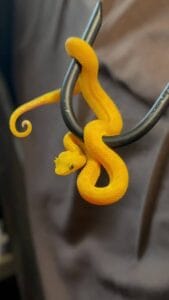
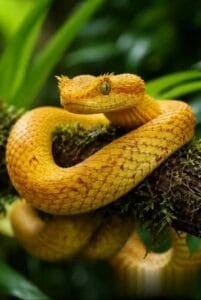
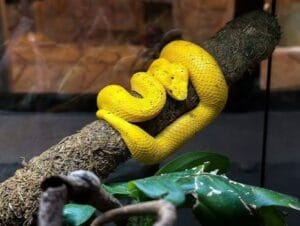
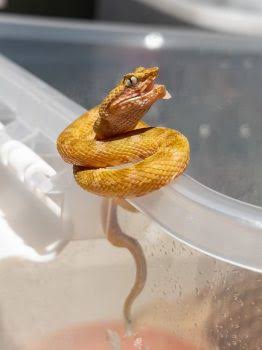
If you’re considering adding an eyelash viper to your collection, you should know that all morphs require the same temperature and humidity. The Christmas Tree Eyelash Viper and Golden Eyelash Viper both come from the same species and the same cloud forest environment.
Here’s what’s currently available at nightfallreptiles.com:
| Morph | Price | Status |
|---|---|---|
| Christmas Tree Eyelash Viper | $510 | Available |
| Golden Eyelash Viper | $510 | Available |
Both are captive bred, established on frozen-thawed prey, and shipping nationwide to legal states.
Christmas Tree Eyelash Viper – $510 – Captive Bred – Nightfall Reptiles
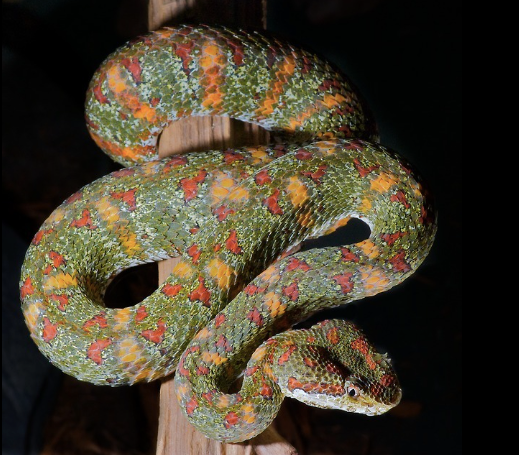
Christmas Tree Eyelash Viper For Sale
Bothriechis schlegeliiCaptive BredMale and Female AvailableApproximately 18 – 24 Inches In LengthAdults Will Grow To About 2 Feet In LengthFeeding On Frozen Thawed Or Live Adult Mice*These Are Venomous. Please Know Your State Laws Before Inquiring As Some States Require Venomous Permits*
100 in stock
Golden Eyelash Viper – $510 – Captive Bred – Nightfall Reptiles
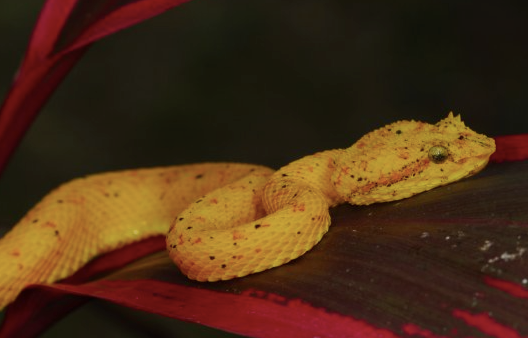
Golden Eyelash Viper For Sale
Bothriechis schlegeliiCaptive BredApproximately 18 – 24 Inches In LengthAdults Will Grow To About 2 Feet In LengthFeeding On Frozen Thawed Or Live Adult Mice*These Are Venomous. Please Know Your State Laws Before Inquiring As Some States Require Venomous Permits*
100 in stock
Whether you choose the Christmas Tree with its green base and red-orange speckles, or the Golden with its warm yellow-gold glow, the care is identical. Dial in your eyelash viper temperature and humidity, and either one will thrive.
Final Thoughts on Eyelash Viper Temperature and Humidity
If there’s one thing I want you to take away from this guide, it’s this: get the environment right, and everything else follows.
Eyelash vipers aren’t difficult snakes to keep once you understand their needs. But those needs are specific. They can’t tell you when they’re too hot or too cold. They can’t adjust their own humidity. They’re completely dependent on you to get it right.
When I finally figured out the correct eyelash viper temperature and humidity for my setup, my snake transformed. She ate consistently. She shed perfectly. She explored her enclosure at night and basked in the open during the day. She became the snake I’d always wanted her to be.
It wasn’t magic. It was just the right environment.
So do your research. Set up your enclosure before the snake arrives. Monitor daily. Adjust as needed. And when your eyelash viper is thriving, you’ll know you did it right.
Ready to put your knowledge into practice?
Check out the Christmas Tree Eyelash Viper and Golden Eyelash Viper available now at nightfallreptiles.com. Both are captive bred, established, and ready for their new home.
Got questions about eyelash viper temperature and humidity? Drop a comment below or hit us up — I’m always down to help fellow keepers.
FAQs
What temperature should an eyelash viper enclosure be?
Eyelash vipers need a temperature gradient with a basking spot of 82-85°F, ambient temperatures of 72-80°F, and a night drop to 68-72°F.
What humidity do eyelash vipers need?
Eyelash vipers need 70-85% humidity during the day, with spikes up to 100% after misting. Nighttime humidity can be higher.
Do eyelash vipers need a heat lamp?
Not necessarily. Heat panels or ceramic heat emitters provide gentle, consistent heat without the intense basking beam. Whatever you use, it must be controlled by a thermostat.
How often should I mist my eyelash viper enclosure?
I mist twice daily — once in the morning and once at night. In dry climates or during winter, you may need to mist three times daily or invest in a misting system.
What happens if eyelash viper humidity is too low?
Low humidity causes dehydration, stuck shed, and respiratory issues. Over time, it can be fatal.
What happens if eyelash viper temperature is too high?
High temperatures cause dehydration, stress, and organ damage. Sustained temperatures above 90°F are dangerous for eyelash vipers.
Do Golden and Christmas Tree Eyelash Vipers need different temperatures?
No. All eyelash viper morphs are the same species (Bothriechis schlegelii) and require identical temperature and humidity.
Disclaimer: This article is based on my personal experience with eyelash viper temperature and humidity. It is not a substitute for professional veterinary advice. Always consult a qualified reptile veterinarian for health concerns. Venomous snake keeping is regulated in many areas — check your local laws before purchasing.