I still remember the day I saw my first Christmas Tree Eyelash Viper in person.
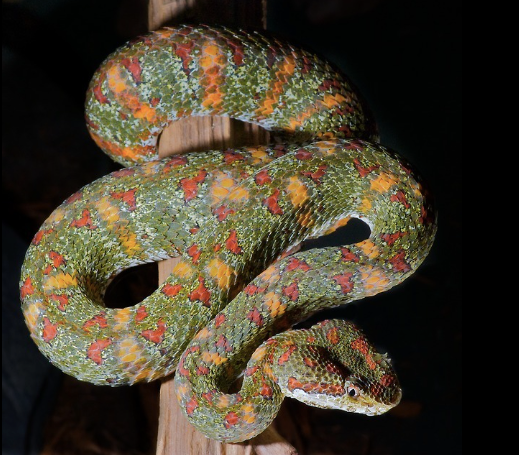
She was coiled on a branch, deep green with red and orange speckles scattered across her body like ornaments. Those signature “eyelashes” above her eyes gave her this perpetually curious expression. I stood there frozen, equal parts mesmerized and terrified.
Looking back now, I made plenty of mistakes in those first few months. I stressed over humidity levels, worried every time she skipped a meal, and spent way too much time second-guessing my setup.
That’s why I’m writing this guide. Not as some expert talking down to you, but as someone who’s been exactly where you are right now — staring at these stunning snakes and wondering if you’re ready for them.
Here’s everything I wish someone had told me before I started keeping eyelash vipers.
What Makes the Christmas Tree Eyelash Viper Special?
The eyelash viper (Bothriechis schlegelii) is a small arboreal pit viper native to Central and South America. They get their name from the modified scales above their eyes that look like, well, eyelashes.
But the Christmas Tree morph is something else entirely.
Imagine a deep emerald green viper dusted with red, orange, and yellow specks — like someone flicked paint across a living ornament. Every single one is different. Some are subtle, with just a few scattered dots. Others look like they belong in an art gallery.
Mine? She’s the crown jewel of my collection.
The Christmas Tree pattern isn’t just beautiful — it’s also highly sought after. Serious keepers spend years looking for quality specimens. When one becomes available captive bred, it doesn’t sit around long.
Product Card: Christmas Tree Eyelash Viper – $510 – Captive Bred – Nightfall Reptiles
Christmas Tree Eyelash Viper For Sale
Bothriechis schlegeliiCaptive BredMale and Female AvailableApproximately 18 – 24 Inches In LengthAdults Will Grow To About 2 Feet In LengthFeeding On Frozen Thawed Or Live Adult Mice*These Are Venomous. Please Know Your State Laws Before Inquiring As Some States Require Venomous Permits*
100 in stock
Are Eyelash Vipers Good for Beginners?
I get asked this question more than any other, especially from people who’ve kept ball pythons or corn snakes and want to step into venomous keeping.
My honest answer? Eyelash vipers are one of the better “first venomous” snakes — but they’re still venomous.
Here’s why they’re often recommended:
- They stay small (rarely exceed 2 feet)
- They’re generally not aggressive — more defensive than anything
- They don’t move fast like cobras or mambas
- Their care requirements are manageable once you dial them in
But here’s what people don’t tell you:
- They’re ambush predators that will sit motionless for days
- A “calm” eyelash viper can still strike without warning
- Their venom can cause severe pain, swelling, and tissue damage
- You need to find a vet who will treat venomous reptiles (harder than you think)
I always tell people: start with hook training and protocols before you even buy the snake. If you can’t safely move a non-venomous snake with a hook, you’re not ready for a viper.
My Eyelash Viper Setup
When I set up my first enclosure, I overcomplicated it. Too many plants, a substrate that held too much moisture, and a heat source that created one hot spot instead of a gradient.
Learn from my mistakes. Here’s what I recommend now:
Enclosure Size
For a single adult eyelash viper, I recommend a 18x18x24 inch tall enclosure at minimum. These are arboreal snakes — they want to climb, not slither across the floor.
Height matters more than floor space. Give them vertical room with branches and perches.
Temperature and Humidity
This is where most new keepers mess up, myself included.
Temperature:
- Basking spot: 85-88°F
- Ambient temp: 75-80°F
- Night drop: 68-72°F
Don’t cook them. These are cloud forest snakes — they don’t need desert-level heat. I use a low-wattage heat panel hooked to a good thermostat.
Humidity:
- Target range: 70-85%
- Spike after misting: up to 100% (temporarily)
I mist once in the morning and once at night. If you live somewhere dry, a misting system is worth every penny. Hand misting gets old fast, and your humidity will fluctuate too much.
Substrate
I’ve tried coconut coir, sphagnum moss, and cypress mulch. They all work, but I prefer a mix of coconut coir and sphagnum moss — it holds moisture without staying soggy.
Stay away from anything dusty or sharp. These snakes are delicate, and a bad substrate can cause scale rot or respiratory issues.
Perches and Décor
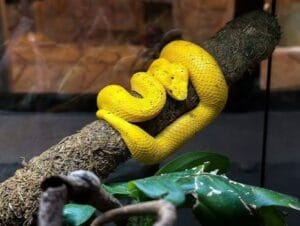
This is the fun part. Eyelash vipers love to perch on horizontal branches, often in an S-shaped coil, waiting for prey to wander by.
I give mine several perch options at different heights:
- A thick branch up high for basking
- A thinner branch mid-level for ambushing
- Fake plants for cover (or real plants if you go bioactive)
Don’t clutter it too much — you still need to see your snake to do health checks.
Feeding My Eyelash Viper
When I first got my eyelash viper, she refused food for three weeks. I panicked. I tried everything — different prey sizes, braining the mouse, even scenting with frog.
Turns out, she just needed time to settle in. Now she’s a garbage disposal.
Here’s my feeding routine:
What I Feed
- Neonates: Day-old pinky mice, every 5-7 days
- Juveniles: Fuzzy mice, every 7-10 days
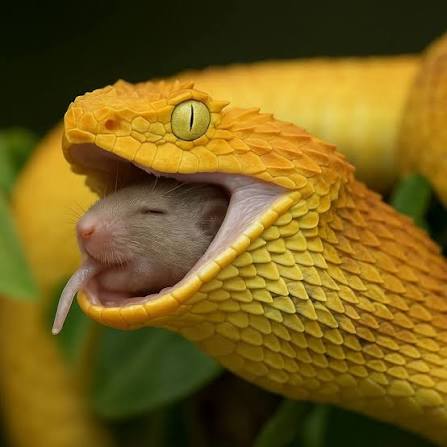
- Adults: Small hopper mice, every 10-14 days
Some keepers swear by offering anoles or house geckos to picky eaters. I’ve done it, but I always try to switch them back to rodents as quickly as possible. It’s more sustainable and easier to source.
What If They Refuse Food?
Don’t freak out. Eyelash vipers can go weeks without eating, especially during shed or seasonal changes. But if it’s been more than a month, check your husbandry:
- Is the temperature too low? They won’t eat if they’re cold.
- Is the humidity too high or too low? Both can suppress appetite.
- Is the enclosure too exposed? They need to feel secure.
- Is the prey item too big? Smaller is better for reluctant feeders.
Handling and Safety: My Non-Negotiables
I don’t handle my eyelash vipers. Ever. These aren’t ball pythons — they don’t enjoy it, and you’re not bonding with them by holding them.
But I do have to move them for enclosure cleaning and health checks. Here’s my protocol:
Tools I Use
- Snake hook (24-32 inches) — for gentle manipulation and keeping distance
- Shift box or snake tube — for moving them without physical contact
- Clear plastic container — for temporary holding during cleaning
How I Move My Viper
- I open the enclosure slowly and locate the snake first
- I use the hook to gently lift the snake’s body (never the head)
- I guide them into a shift box or container
- I close the container before doing anything else
It sounds simple, but you’d be surprised how many people get bit because they got lazy.
What If I Get Bit?
This is the part nobody wants to think about, but you need to.
Eyelash viper venom is hemotoxic — it causes pain, swelling, bruising, and potential tissue damage. It’s rarely fatal to healthy adults, but it’s a serious medical emergency.
My protocol:
- Stay calm (easier said than done)
- Remove any rings or jewelry
- Keep the bitten limb still and below heart level
- Get to a hospital immediately
- Do NOT try to suck out venom, cut the wound, or use a tourniquet
I also recommend having a venomous snake bite protocol printed out and stuck to your snake room door. If you’re incapacitated, someone else needs to know what to do.
Captive Bred vs Wild Caught: Why It Matters
This is something I’m passionate about, so listen up.
Never buy a wild-caught eyelash viper.
Here’s why:
- They’re loaded with parasites
- They’re stressed from importation
- They often refuse food in captivity
- They’re defensive and unpredictable
- They’re damaging wild populations
Captive bred is the only way to go. You get a snake that:
- Is established and eating regularly
- Has no parasite issues
- Is used to human presence (from a distance)
- Has a known birth date and history
- Supports ethical breeding
Product Card: Christmas Tree Eyelash Viper – $510 – Captive Bred – Nightfall Reptiles
Christmas Tree Eyelash Viper For Sale
Bothriechis schlegeliiCaptive BredMale and Female AvailableApproximately 18 – 24 Inches In LengthAdults Will Grow To About 2 Feet In LengthFeeding On Frozen Thawed Or Live Adult Mice*These Are Venomous. Please Know Your State Laws Before Inquiring As Some States Require Venomous Permits*
100 in stock
Both of my eyelash vipers came from reputable breeders and were eating frozen-thawed before I got them. That’s non-negotiable for me, and it should be for you too.
Where to Buy a Captive Bred Eyelash Viper
If you’ve read this far and you’re serious about getting one, here’s my recommendation:
Nightfall Reptiles currently has two captive bred eyelash vipers available:
| Morph | Price | Status |
|---|---|---|
| Christmas Tree Eyelash Viper | $510 | Available |
| Golden Eyelash Viper | $510 | Available |
I’ve seen a lot of eyelash vipers for sale over the years, and these are quality animals. They’re established, eating well, and shipped nationwide to legal states.
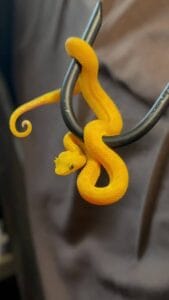
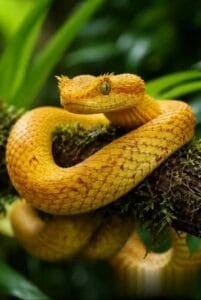
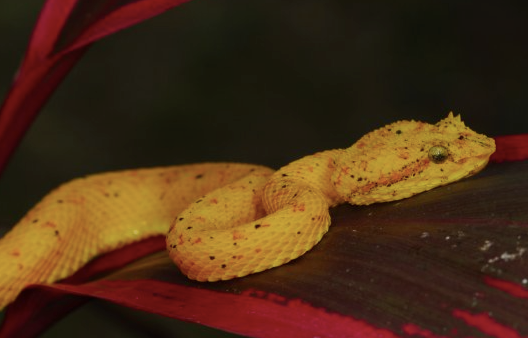
The Christmas Tree is my personal favorite — that green and red speckling is just unreal. But the Golden is stunning too, with that warm yellow-gold base that glows under the right lighting.
Product Cards:
Christmas Tree Eyelash Viper – $510 – Captive Bred
Christmas Tree Eyelash Viper For Sale
Bothriechis schlegeliiCaptive BredMale and Female AvailableApproximately 18 – 24 Inches In LengthAdults Will Grow To About 2 Feet In LengthFeeding On Frozen Thawed Or Live Adult Mice*These Are Venomous. Please Know Your State Laws Before Inquiring As Some States Require Venomous Permits*
100 in stock
Golden Eyelash Viper – $510 – Captive Bred
Golden Eyelash Viper For Sale
Bothriechis schlegeliiCaptive BredApproximately 18 – 24 Inches In LengthAdults Will Grow To About 2 Feet In LengthFeeding On Frozen Thawed Or Live Adult Mice*These Are Venomous. Please Know Your State Laws Before Inquiring As Some States Require Venomous Permits*
100 in stock
Final Thoughts: Should You Get an Eyelash Viper?
If you’ve read this far, you’re clearly serious about it. That’s good. This hobby needs more responsible keepers, not fewer.
Here’s my honest take:
Get an eyelash viper if:
- You’ve kept non-venomous snakes for at least a year
- You have a mentor or you’ve done extensive research
- You have a vet lined up who will treat venomous reptiles
- You’re prepared for the long-term commitment (they live 10-20 years)
- You understand that this is a display animal, not a pet to handle
Don’t get one if:
- You want to show off to your friends
- You think venomous keeping is “cool”
- You’re on a tight budget
- You live somewhere where they’re illegal (check your local laws)
I’ll be honest — keeping eyelash vipers changed how I approach reptile keeping entirely. They’re not “pets” in the traditional sense. They’re more like a living piece of the cloud forest that I get to observe and care for.
And when you see a Christmas Tree morph coiled on a branch, those red and orange speckles catching the light…
Man, it’s worth every bit of effort.
Ready to add an eyelash viper to your collection?
Check out the Christmas Tree Eyelash Viper and Golden Eyelash Viper available now at nightfallreptiles.com. Both are captive bred, established, and shipping nationwide.
Got questions about eyelash viper care or these specific animals? Drop a comment below or hit us up — I’m always down to talk vipers.
FAQs
How venomous is an eyelash viper?
Eyelash vipers are medically significant venomous snakes. Their hemotoxic venom causes severe pain, swelling, and potential tissue damage. Bites are rarely fatal to healthy adults but always require immediate medical attention.
How big do eyelash vipers get?
Most eyelash vipers stay between 18-30 inches (45-75 cm). Females tend to be larger than males.
How long do eyelash vipers live?
In captivity with proper care, eyelash vipers can live 10-20 years.
What’s the difference between a Christmas Tree and Golden Eyelash Viper?
The Christmas Tree morph has a deep green base with red, orange, and yellow speckles scattered across the body. The Golden morph has a warm yellow-gold base that’s more uniform in color. Both are the same species (Bothriechis schlegelii) and require identical care.
Are these eyelash vipers captive bred?
Yes. Both the Christmas Tree and Golden eyelash vipers at nightfallreptiles.com are captive bred and established on frozen-thawed prey.
Do you ship eyelash vipers nationwide?
Yes, nightfallreptiles.com ships to all legal states. Check your local laws before ordering.
Can I hold my eyelash viper?
No. Eyelash vipers are venomous and should never be handled like a pet snake. Use proper tools (hooks, shift boxes) for any necessary enclosure maintenance.
Disclaimer: This article is based on my personal experience keeping eyelash vipers. It is not a substitute for professional veterinary advice. Always consult a qualified reptile veterinarian for health concerns. Venomous snake keeping is regulated in many areas — check your local laws before purchasing.