I still remember the first time a customer called me in a panic. She’d bought a “chameleon for sale” from a big-box listing she found on a marketplace site — cheap, fast shipping, no questions asked. Three days later, the animal was dead. The seller wouldn’t answer her calls. She was devastated, and honestly, she was also out $180 with nothing to show for it but a screen cage and a broken heart.
That call is exactly why I wrote this guide.
If you’re searching for a chameleon for sale, you’ve probably noticed there are hundreds of listings — some for $40, some for $700, and a few for well over $1,000. You’ve probably seen sellers on Craigslist, Facebook Marketplace, big reptile retailers, boutique breeders, and everything in between. And if you’re like most of my customers, you’re asking yourself the same questions I hear every single week:
- How much should I actually pay for a healthy chameleon?
- Which species is right for me — veiled, panther, Jackson’s, or something else?
- How do I know if a seller is legit or just flipping wild-caught imports?
- What does a complete setup really cost?
- What happens if the animal arrives sick or dead?
This guide answers every one of those questions and more. I’m going to walk you through the entire process of buying a chameleon — from choosing the right species to evaluating breeders to setting up a habitat that keeps your new pet thriving for years. This isn’t a quick sales pitch. It’s a comprehensive resource I’ve built from years of keeping, breeding, and shipping chameleons, and it’s the same advice I give to every customer who calls Nightfall Reptiles before making a purchase.
One important note before we dive in: chameleons are not beginner reptiles. They’re rewarding, fascinating, and genuinely beautiful animals — but they have specific needs that don’t forgive mistakes the way a leopard gecko or corn snake might. If you’re ready to commit to those needs, this guide will give you everything you need to make a smart, confident purchase.
Let’s get into it.
Why Buy a Captive-Bred Chameleon for Sale Instead of Wild-Caught
This is the single most important decision you’ll make before you even start shopping, and it’s the one most buyers don’t think about until it’s too late.
When you see a chameleon for sale at an unusually low price — say $50 or $60 — there’s a good chance you’re looking at a wild-caught import. These animals are collected from the wild in Madagascar, Yemen, Tanzania, or Kenya, packed into cramped shipping containers by the hundreds, and distributed to wholesalers and pet stores across the country. The stress of that journey is immense, and a significant percentage of wild-caught chameleons arrive already carrying internal parasites, respiratory infections, or severe dehydration.
Captive-bred chameleons, by contrast, are born and raised in captivity. They’re acclimated to human presence, eat consistently, and are far less likely to arrive with the health problems that plague imports. They also tend to live significantly longer. A well-cared-for captive-bred veiled chameleon can live 5–8 years, while a wild-caught specimen might only survive 2–3 years even with excellent care.
At CB Reptile, the philosophy is simple: captive breeding is the future of the reptile hobby
. I share that philosophy completely. Every chameleon I sell at Nightfall Reptiles is captive-bred, and I can trace the lineage of every animal I produce. When you buy a wild-caught chameleon, you’re rolling the dice on an animal that may never fully acclimate to captivity. When you buy captive-bred, you’re starting with an animal that was born for this life.
How to tell the difference:
| Factor | Captive-Bred | Wild-Caught |
|---|---|---|
| Price | $100–$700+ depending on species | $40–$150 (suspiciously cheap) |
| Health | Generally robust, parasite-free | High risk of parasites, dehydration |
| Temperament | Calm, accustomed to humans | Stressed, defensive, may never settle |
| Lifespan | 5–8 years (veiled), 5–7 years (panther) | 2–3 years even with good care |
| Documentation | Breeder can provide hatch dates, lineage | Often no paperwork at all |
| Availability | Seasonal, limited by clutch size | Year-round, large quantities |
If a seller can’t tell you when the animal hatched, what it’s been eating, or who produced it, walk away. That’s not a breeder — that’s a flipper.
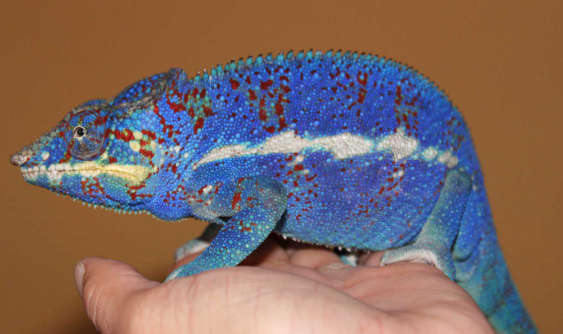
Ambanja Panther Chameleon For Sale
Furcifer pardalisCaptive BredMales and FemalesApproximate Sizes Ranging From 12 – 18 In LengthAdults Are Averaging Around 12 – 18 Inches In Total LengthFeeding On Vitamin Dusted Crickets, Worms And Roaches
100 in stock
Chameleon Species for Sale: Which One Is Right for You?
Not all chameleons are created equal. Some are hardy and forgiving; others are delicate and demanding. The species you choose will determine everything from your setup costs to your daily care routine to how long your pet lives. Here’s an honest breakdown of the species I work with and the ones you’ll most commonly see for sale.
Veiled Chameleon (Chamaeleo calyptratus)
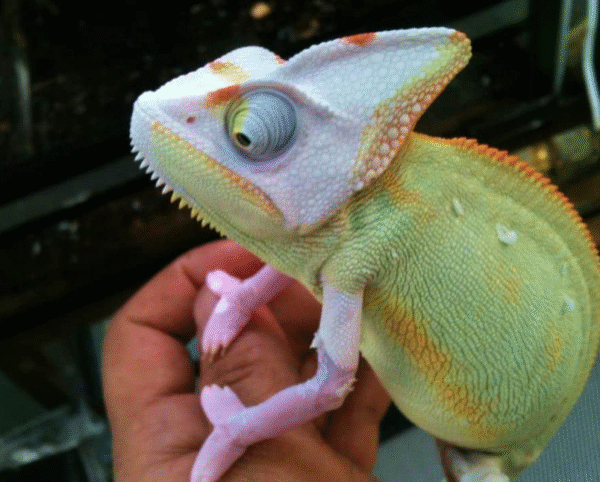
Translucent Veiled Chameleon for Sale
Chamaeleo calyptratusCaptive BredMales And Females AvailableApproximately 4 – 5 Inches In LengthAdults Can Grow On Average From 10 – 15 Inches In Total LengthTree Top Hunters Feeding On Calcium Dusted Crickets
100 in stock
Price range: $60–$350 depending on age, coloration, and bloodline
The veiled chameleon is the most popular chameleon in the pet trade, and for good reason: it’s the most hardy and adaptable of all commonly kept species, tolerating a wider range of temperatures and handling more beginner mistakes than any other
. Native to Yemen and Saudi Arabia, veiled chameleons are instantly recognizable by the tall casque (helmet) on top of their head, which they use for thermoregulation and — in males — for display during territorial disputes.
Males typically grow to 18–24 inches in total length, while females stay smaller at 10–14 inches. The smaller size of females makes them a popular choice for keepers with limited space, but females also have a significant downside: they produce eggs whether or not they’ve been bred, which means they need a laying bin and are at risk of becoming egg-bound (dystocia) if they can’t find suitable soil to dig in.
Designer Veiled Chameleons are a higher-end option for keepers who want more vivid coloration. These are hand-picked, high-color animals paired with premium females to produce offspring with more intense greens, yellows, and banding patterns
. They typically run $189–$290 depending on the animal’s age and coloration.
Who veiled chameleons are for: First-time chameleon keepers, keepers on a budget, anyone who wants a hardy, forgiving animal that still looks spectacular.
Panther Chameleon (Furcifer pardalis)
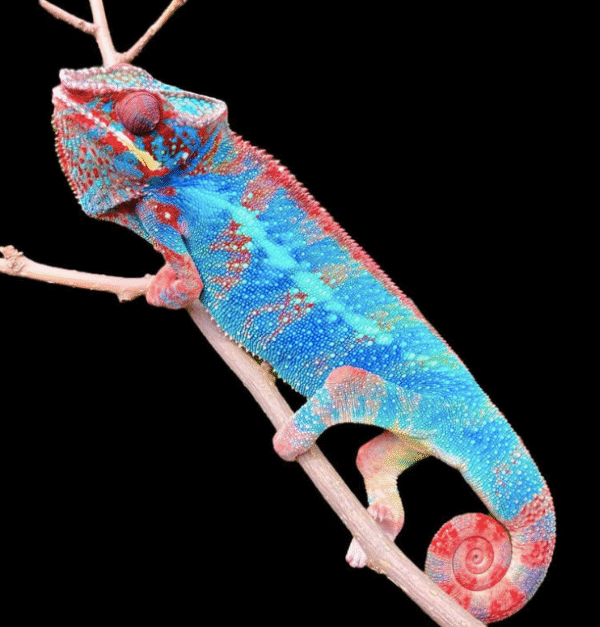
Ambilobe Panther Chameleon for Sale
Furcifer pardalisCaptive BredApproximate Sizes Ranging From 9 – 12 Inches LengthAdults Are Averaging Around 12 – 18 Inches In Total LengthFeeding On Vitamin Dusted Crickets, Worms And Roaches
100 in stock
Price range: $150–$750+ depending on locale, age, and color
If veiled chameleons are the reliable workhorse of the chameleon world, panther chameleons are the showstoppers. Native to Madagascar, panther chameleons are famous for their extraordinary color variation — and that variation is tied to where the animal’s ancestors came from. In the wild, panther chameleons are separated by geography into distinct populations called locales, each with its own characteristic color palette.
Ambilobe panthers erupt in blazing reds, oranges, and yellows with electric blue bars — one of the most colorful reptiles on Earth
. A male Ambilobe in full display is genuinely breathtaking, and it’s the locale most first-time panther buyers gravitate toward.
Ambanja panthers are celebrated for their stunning royal blue and green coloration, often accented with striking purple hues
. If you want a blue panther, Ambanja is your answer.
Nosy Be panthers, named after the island off Madagascar’s northwestern coast, produce some of the most vivid turquoise and sky-blue males in the entire species
. Locale-pure Nosy Be animals are highly sought after by breeders and collectors.
Sambava panthers are among the most fiercely colored locales, with deep reds, burnt oranges, and contrasting white lateral stripes. They’re considered one of the more rare locales and are available as babies, juveniles, and young adults
.
Panther chameleons are slightly more demanding than veiled chameleons in terms of humidity and temperature control, but they’re far from impossible for a dedicated first-timer. Expect to pay $399–$679 for a quality captive-bred animal from a reputable breeder, with exceptional bloodlines or proven breeders commanding higher prices.
Who panther chameleons are for: Keepers who want the most colorful chameleon available, anyone willing to invest a bit more time in humidity management, and hobbyists who appreciate the genetic diversity of the different locales.
Jackson’s Chameleon (Trioceros jacksonii)
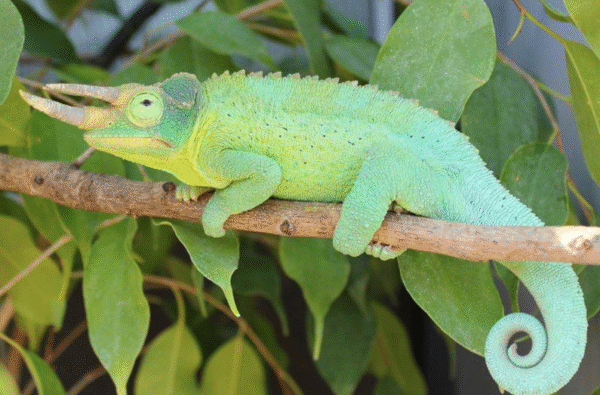
Jackson’s Chameleon for Sale
Jacksonii jacksoniiCaptive BredApproximately 5 – 8 Inches In Length From Head To TailAdults Average 8 – 10 Inches In Length From Head To TailFeeding On Vitamin Dusted Crickets And Mealworms
100 in stock
Price range: $80–$250
Jackson’s chameleons are the unicorns of the chameleon world — or more accurately, the triceratops. Males sport three prominent rostral horns reminiscent of the famous dinosaur, and they’re one of the few chameleon species that give live birth rather than laying eggs
. Native to the humid cloud forests of East Africa, Jackson’s chameleons thrive in cooler, mistier conditions than panther or veiled chameleons.
That cooler preference makes them a great choice for keepers in temperate climates, but it also means you need to be careful about heat. A Jackson’s chameleon that gets too warm can quickly become stressed and dehydrated. They’re also more sensitive to handling stress than veileds, though captive-bred individuals can become quite calm with patience.
Jackson’s chameleons typically sell for $80–$250 depending on age and sex. They’re a fantastic intermediate species — not quite as forgiving as a veiled, but not as demanding as some of the rarer montane species.
Who Jackson’s chameleons are for: Keepers in cooler climates, hobbyists who want a unique-looking animal, and anyone interested in the rare experience of keeping a live-bearing chameleon.
Other Chameleon Species You Might Encounter
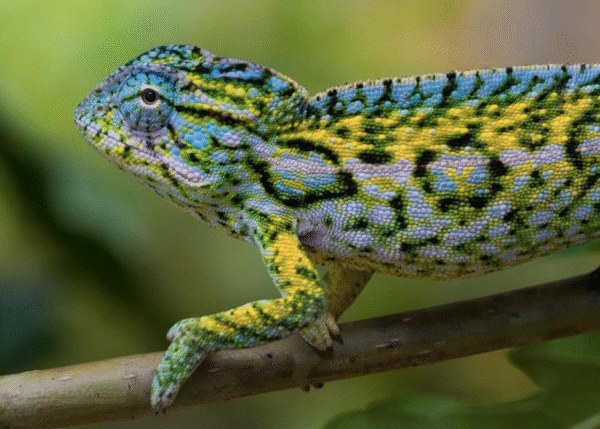
Beyond the “big three,” there are dozens of other chameleon species available in the hobby, each with its own care requirements and price point. Carpet chameleons (Furcifer lateralis) are small, colorful, and relatively hardy, typically selling for $100–$200. Helmeted chameleons (Trioceros hoehnelii) are live-bearing like Jackson’s but smaller, often available for $80–$300. Canopy chameleons (Furcifer willsii) are field-collected from Madagascar and sell for around $150. Dwarf nose-horned chameleons are a tiny species — adults only reach about 2.5 inches — available for around $150.
A quick warning about “rare” species: If you’re new to chameleon keeping, stick with veiled, panther, or Jackson’s. The rarer species often have more specific requirements, are harder to find captive-bred, and can be significantly less forgiving of mistakes. Get your husbandry skills solid on a hardier species first, then branch out.
How Much Does a Chameleon Cost? Full Price Breakdown
The purchase price is only one part of the equation. Let’s talk about the real numbers.
Purchase Price by Species
| Species | Hatchling/Juvenile | Sub-Adult | Adult/Proven Breeder |
|---|---|---|---|
| Veiled (standard) | $60–$120 | $100–$180 | $150–$250 |
| Veiled (designer) | $150–$200 | $200–$250 | $250–$350 |
| Panther (common locale) | $199–$399 | $350–$500 | $500–$750 |
| Panther (premium locale) | $399–$550 | $500–$680 | $680–$900+ |
| Jackson’s | $80–$150 | $150–$200 | $200–$300 |
| Carpet | $100–$150 | $150–$200 | $200–$250 |
At the low end, you’ll find veiled chameleons for sale for as little as $60–$70 from some sellers. At the high end, a proven breeder Ambilobe panther with exceptional lineage can exceed $1,000. Most first-time buyers should expect to spend $150–$400 on the animal itself.
Setup Costs
This is where most new keepers get blindsided. A proper chameleon setup is not cheap, and cutting corners here is the fastest way to end up with a sick animal.
A basic screen enclosure kit for a juvenile veiled or panther chameleon runs around $120–$230, while larger deluxe kits are about $185 before you add extra vines, plants, and hydration tools
. A complete setup for an adult chameleon — including a 2x2x4-foot screen cage, UVB lighting, heat lamp, misting system, live or artificial plants, branches, drainage, and thermometers/hygrometers — typically costs $300–$800 depending on how automated you want to go.
Here’s a realistic setup budget for a first-time keeper:
| Item | Budget Option | Premium Option |
|---|---|---|
| Screen enclosure (2x2x4 ft) | $80–$120 | $150–$250 |
| UVB lighting (T5HO or equivalent) | $60–$100 | $100–$150 |
| Heat lamp + fixture | $30–$50 | $50–$80 |
| Misting system (manual sprayer) | $15–$30 | — |
| Misting system (automatic) | — | $100–$200 |
| Live plants + branches | $40–$80 | $80–$150 |
| Thermometer + hygrometer | $15–$30 | $30–$50 |
| Supplements (calcium, multivitamin) | $20–$40 | $40–$60 |
| Total | $260–$450 | $550–$940 |
That’s before you buy the chameleon itself. All in, a first-time chameleon keeper should budget $400–$1,300 for the animal and a complete setup. The ongoing cost of feeders, supplements, and electricity is typically $30–$60 per month.
Is there a cheaper way? Yes — you can buy a used enclosure from a local reptile group, use artificial plants instead of live ones, and start with a manual sprayer instead of an automated misting system. But I’d strongly advise against skimping on UVB lighting and the enclosure size. Those are non-negotiables for a healthy chameleon.
How to Choose a Chameleon Breeder You Can Trust
This is the section I wish every buyer would read before they click “Add to Cart” on some random listing. The difference between a good breeder and a bad one isn’t just about the animal’s health when it arrives — it’s about whether you have support if something goes wrong.
Signs of a Reputable Breeder
They can tell you the hatch date. Every reputable breeder tracks hatch dates. If a seller can’t tell you when the animal was born, they didn’t produce it — they bought it from someone else and are flipping it.
They can tell you what the animal has been eating. A healthy chameleon eats a varied diet of gut-loaded insects. If the seller says “crickets” and nothing else, that’s a red flag. My animals are fed a diverse gut-loaded diet including black soldier fly larvae, silkworms, crickets, and a rotating variety of organic produce including cilantro, squash, carrots, sweet potato, spring mix, papaya, and mango
.
They can show you photos of the actual animal. Not a stock photo. Not a “representative image.” The actual chameleon you’re buying.
They offer a live arrival guarantee. This is non-negotiable for shipped animals. A live arrival guarantee means the breeder stands behind their shipping — if the animal arrives dead, they replace it or refund you. Many breeders also offer a health guarantee that extends 7–14 days after arrival, giving you time to observe the animal and catch any emerging issues.
They have reviews and a track record. Check MorphMarket feedback, Google reviews, Facebook groups, and reptile forum threads. A breeder with 169 sales and positive feedback is a known quantity. A seller with zero reviews and a generic website is a gamble.
Red Flags to Watch For
- Prices that are dramatically lower than everyone else. If every reputable breeder sells captive-bred veiled chameleons for $100–$150 and someone is selling them for $40, something is wrong. That’s a wild-caught import or a sick animal.
- No photos of the actual animal. Stock photos mean the seller isn’t showing you what you’re actually buying.
- No live arrival guarantee. If they won’t stand behind their shipping, they don’t trust their own animals.
- No health guarantee of any kind. “All sales final” on a live animal is a massive red flag.
- Pressure to buy immediately. “This one won’t last long!” — used car sales tactics don’t belong in reptile sales.
- No contact information beyond a form. Reputable breeders are reachable by phone, email, or direct message. If you can’t have a conversation with the person selling you a living animal, find someone else.
At Nightfall Reptiles, I offer a live arrival guarantee and a 7-day health guarantee on every chameleon I ship. I answer every message personally, and I’ll talk you through your setup before you buy — because I’d rather spend 20 minutes on the phone than have you lose an animal because your UVB bulb wasn’t strong enough.
Chameleon Care Essentials: What You Need to Know Before You Buy
I’m not going to pretend this section is optional. If you’re buying a chameleon, you need to understand these basics. The good news is that chameleon care is entirely learnable — it just requires attention to detail.
Enclosure Size and Type
Chameleons are arboreal. They live in trees and bushes, and they need vertical space far more than horizontal space. A screen enclosure is strongly recommended for most species to ensure proper ventilation and promote good air quality
.
Minimum enclosure sizes:
- Veiled chameleon (adult): 24″ x 24″ x 48″ (2 ft x 2 ft x 4 ft)
- Panther chameleon (adult): 24″ x 24″ x 48″
- Jackson’s chameleon (adult): 18″ x 18″ x 36″ minimum, larger preferred
- Juveniles: Can start in a smaller cage (16″ x 16″ x 30″) but will need an upgrade within 6–12 months
A typical chameleon cage will be about 2 feet long, 2 feet wide, and between 3 and 4 feet high
. Don’t try to save money by buying an undersized enclosure. A cramped chameleon is a stressed chameleon, and stressed chameleons get sick.
Lighting: UVB Is Not Optional
Chameleons need UVB light to synthesize vitamin D3, which they need to absorb calcium. Without adequate UVB, they develop metabolic bone disease (MBD) — a painful, progressive condition that softens the bones and eventually kills the animal.
Use a T5HO UVB bulb (typically 5.0 or 10.0 depending on species and enclosure height) and replace it every 6–12 months, even if it still lights up. UVB output degrades over time even when the bulb appears functional. A UVB meter is a worthwhile investment if you’re serious about chameleon keeping.
You’ll also need a basking bulb to create a temperature gradient. Chameleons thermoregulate by moving between warm and cool areas, so the enclosure should offer a range of temperatures.
Temperature and Humidity
Temperature and humidity requirements vary by species, but here are the general ranges:
| Species | Basking Spot | Ambient (Day) | Night | Humidity |
|---|---|---|---|---|
| Veiled | 90–95°F | 72–85°F | 65–70°F | 50–70% |
| Panther | 85–90°F | 72–80°F | 65–70°F | 60–80% |
| Jackson’s | 80–85°F | 70–78°F | 60–65°F | 70–90% |
Veiled chameleons require a basking spot of 90–95°F with a cooler area of 70–80°F. Panther chameleon humidity should be kept between 60–80% by spraying or fogging the enclosure at regular intervals
.
Use a digital thermometer/hygrometer at both the basking spot and the cool end of the enclosure. Analog gauges are notoriously inaccurate.
Hydration: Misting and Drippers
Chameleons don’t drink from standing water. They drink water droplets from leaves. This is one of the most common mistakes new keepers make — they put a water bowl in the enclosure and wonder why their chameleon is dehydrated.
Mist the enclosure 2–3 times daily (more for Jackson’s) to create water droplets on the plants and screen. An automatic misting system makes this much easier and more consistent. You can also use a dripper to provide a slow, steady source of dripping water throughout the day.
Feeding and Supplementation
Chameleons are insectivores. They need a varied diet of live insects, not just crickets. A good staple rotation includes crickets, dubia roaches, black soldier fly larvae, silkworms, and hornworms. The insects themselves should be gut-loaded — fed a nutritious diet before being offered to your chameleon.
Dust feeders with calcium supplement daily (without D3 if you’re using proper UVB) and a multivitamin supplement once or twice a week
. Feed juveniles once or twice daily, and adults every other day.
Important for veiled chameleons: They’re one of the few chameleon species that will eat plant matter. Offer collard greens, mustard greens, dandelion greens, and hibiscus flowers as part of their diet. This is not a substitute for insects — it’s a supplement.
Handling
Chameleons are not “cuddly” pets. They tolerate handling; they don’t enjoy it. Keep handling sessions short (under 10–15 minutes), support the animal’s entire body, and never grab a chameleon from above — they perceive that as a predator attack. Move slowly, let the animal walk onto your hand rather than picking it up, and respect its body language. If it’s gaping, hissing, or turning dark colors, put it back.
Captive-bred chameleons generally tolerate handling much better than wild-caught animals, but even the calmest chameleon will become stressed if handled excessively.
Shipping and Live Arrival Guarantees: What to Expect When You Buy Online
Buying a chameleon online is standard practice in the reptile hobby, but the shipping experience varies dramatically between sellers.
How Chameleon Shipping Works
Reputable breeders ship chameleons via overnight courier (FedEx or UPS) in insulated boxes with heat packs or cool packs depending on the season. The animal is typically packed in a cloth bag or deli cup with padding, and the box is labeled “Live Harmless Reptile.” Most shipments leave the facility in the late afternoon and arrive at your door before noon the next day.
Understanding Live Arrival Guarantees
A live arrival guarantee (LAG) is the seller’s promise that the animal will arrive alive. But the details matter, and they vary significantly between sellers.
Common conditions of a live arrival guarantee:
- The package must be accepted on the first delivery attempt
- Someone must be present to sign for the package
- If the package is held at a pickup location (hub), it must be collected within a specified time (often 2 hours)
- Any DOA (dead on arrival) must be reported within a specified time (often 1 hour) with photos
- Failure to meet these conditions voids the guarantee
At CB Reptile, every animal ships with a live arrival guarantee and a full 7-day health guarantee
. I offer the same at Nightfall Reptiles. If your chameleon arrives dead, I replace it. If it develops a health issue within 7 days that can be traced to shipping or pre-existing conditions, I’ll work with you to make it right.
What a live arrival guarantee does not cover:
- Improper husbandry after arrival (wrong temperatures, inadequate UVB, dehydration from lack of misting)
- Failure to follow the seller’s acclimation instructions
- Injuries caused by handling or by other pets
- Stress-related issues that develop weeks after arrival
This is why the health guarantee is only the first line of defense. The real protection for your chameleon is proper care.
Acclimating Your New Chameleon
When your chameleon arrives, resist the urge to handle it immediately. Place the shipping container inside the enclosure (unopened) and let it sit for 15–20 minutes to gradually adjust to the temperature. Then open the container and allow the chameleon to climb out on its own into the enclosure.
Leave the animal alone for the first 48–72 hours. Don’t handle it, don’t rearrange the enclosure, and keep traffic around the cage to a minimum. Offer food after the first 24 hours, but don’t panic if it doesn’t eat immediately. A stressed chameleon may take several days to settle in and start eating consistently.
Monitor hydration by checking for urate (the white part of the droppings). If the urate is yellow or orange, the animal is dehydrated and you need to increase misting.
Chameleon Health: What to Watch For and When to Call a Vet
Even with perfect husbandry, chameleons can develop health issues. Knowing the warning signs can mean the difference between a quick recovery and a preventable death.
Common Health Problems
Metabolic Bone Disease (MBD): Caused by inadequate UVB, insufficient calcium, or both. Symptoms include soft or rubbery jaw, curved limbs, difficulty climbing, and tremors. This is the most common preventable disease in captive chameleons.
Dehydration: Yellow or orange urate, sunken eyes, lethargy, and loss of appetite. Increase misting and consider adding a dripper. If severe, a vet may need to administer fluids.
Respiratory Infection: Wheezing, clicking sounds when breathing, open-mouthed breathing, mucus around the nose or mouth. Often caused by temperatures that are too cool or humidity that’s too high without adequate ventilation. Requires veterinary treatment with antibiotics.
Stomatitis (Mouth Rot): Redness, swelling, or pus around the mouth. Often caused by trauma (rubbing against the screen) combined with poor hygiene. Requires veterinary treatment.
Egg Binding (Dystocia): Occurs in females that cannot lay their eggs. Symptoms include lethargy, straining, loss of appetite, and swelling in the lower abdomen. This is a medical emergency that requires immediate veterinary attention. All female chameleons need access to a laying bin with damp, diggable substrate (play sand and organic soil mix works well).
Finding a Reptile Vet
Not all veterinarians treat reptiles. Before you buy a chameleon, find a qualified reptile/exotic vet in your area and save their number. A good reptile vet is worth their weight in gold, and having one lined up before an emergency happens can save your chameleon’s life.
Frequently Asked Questions About Chameleons for Sale
Q: How much does a chameleon cost?
A: Veiled chameleons typically cost $60–$350 depending on age and coloration. Panther chameleons range from $199–$750+, with premium locales and proven breeders commanding higher prices. Jackson’s chameleons sell for $80–$250. A complete setup adds another $300–$800.
Q: Are chameleons good pets for beginners?
A: Chameleons are intermediate-level reptiles. They’re not as forgiving as leopard geckos or corn snakes, but a dedicated beginner can absolutely succeed with a veiled chameleon. Start with a captive-bred animal from a reputable breeder, follow a detailed care guide, and don’t cut corners on lighting or enclosure size.
Q: How long do chameleons live in captivity?
A: With proper care, veiled chameleons live 5–8 years, panther chameleons live 5–7 years, and Jackson’s chameleons can live 8–10 years. Males generally live longer than females, partly because egg production takes a toll on females’ bodies.
Q: Can I keep two chameleons together?
A: No. Chameleons are solitary and territorial. Housing two together — even a male and female outside of breeding season — causes chronic stress that shortens lifespan and can lead to fighting. Each chameleon needs its own enclosure.
Q: Do chameleons need a heat lamp at night?
A: Generally, no. Chameleons benefit from a nighttime temperature drop. Unless your room temperature drops below 60°F, you don’t need nighttime heat. In fact, a cooler night period is beneficial for their metabolism and immune function.
Q: What’s the best chameleon for a first-time keeper?
A: The veiled chameleon is the most forgiving and widely available option. It’s hardy, tolerates a wider temperature range, and is less sensitive to humidity fluctuations than panther or Jackson’s chameleons. Captive-bred veiled chameleons are also relatively affordable, leaving more of your budget for proper equipment.
Q: How do I know if a chameleon is healthy before I buy it?
A: Look for clear, open eyes; smooth skin without retained shed; a straight, well-formed jaw; strong grip; active behavior during the day; and consistent eating. Ask the seller for a video of the animal eating. A healthy chameleon should be alert and responsive, not lethargic or sitting on the floor of the enclosure.
Q: Can I buy a chameleon for sale near me instead of having one shipped?
A: Yes. If you have a local reptile show, specialty reptile shop, or reputable breeder within driving distance, buying in person lets you see the animal before purchasing. However, many of the best breeders ship nationwide, and the shipping process is safe and well-established when done properly. Don’t limit yourself to local options if the best animal for you is across the country.
Q: What should I do if my chameleon arrives sick or dead?
A: Contact the seller immediately. Take photos and videos of the animal and the shipping container. If the seller offers a live arrival guarantee, follow their reporting procedure exactly. Reputable breeders will replace the animal or issue a refund. If the seller refuses to honor their guarantee, report them to MorphMarket (if that’s where you bought) and leave a review warning other buyers.
Q: Is it legal to own a chameleon?
A: In most of the United States and Canada, yes. However, chameleons are illegal to keep in Australia and New Zealand, and some states or municipalities have restrictions. Always check your local laws before purchasing.
Final Thoughts: Buy Smart, Keep Well
Buying a chameleon is exciting. It’s also a commitment — not just financially, but in terms of time, attention, and learning. The animal you bring home will depend on you for everything: its heat, its light, its water, its food, its safety. That’s a responsibility worth taking seriously.
The good news is that with the right information and the right animal, chameleon keeping is one of the most rewarding experiences in the reptile hobby. Watching a panther chameleon fire up in full display, or seeing a veiled chameleon hunt down a cricket with that lightning-fast tongue, is genuinely magical. These animals are living jewels, and they deserve keepers who are prepared to give them the care they need.
If you’re ready to bring one home, I’d be honored to help. Every chameleon at Nightfall Reptiles is captive-bred, health-checked, and backed by a live arrival guarantee and a 7-day health guarantee. I answer every message personally, and I’ll talk you through your setup before you buy — because I want your chameleon to thrive, not just survive.
Browse my current chameleon for sale listings, or reach out if you have questions. I’m always happy to talk chameleons.
About the author: This guide was written by the team at Nightfall Reptiles, a captive-bred reptile breeder specializing in night-active and cave-dwelling species, including chameleons, geckos, and skinks. We ship nationwide with live arrival and health guarantees on every animal.